Key Takeaways:
- Search & Display Ads serve different purposes: Search campaigns capture users with intent who are already looking for your solutions, while Display campaigns build brand awareness and enable remarketing to previous website visitors.
- Align Campaign selection with specific business goals: Lead generation strategies should prioritize Search campaigns with Display remarketing, while brand awareness objectives benefit from Display and Video campaign combinations.
- Specialized campaign types offer unique advantages for life sciences: Shopping campaigns might work best for equipment and supply sales, while Performance Max leverages all of Google’s properties for comprehensive reach – perfect for startups coming out of stealth mode and looking to boost brand awareness across the web.
- Optimization drives better long-term results: Start with Search and Display campaign foundations to gather performance data, then strategically expand to Video, Shopping, or Performance Max based on business needs and conversion insights.
Google Ads Campaign Types: How to Choose the Best Fit for You
Selecting the right Google Ads campaign type can determine how well your biotech marketing budget generates qualified, high-intent leads and boosts brand awareness.
In the life sciences sector, this decision becomes even more important given the specialized nature of audiences, the sophistication of target customer profiles, and the complexity of products and services.
Google Ads are a foundational part of a competitive marketing strategy, but new users may initially struggle simply because they start with the wrong campaign type. Once you understand how different campaign types work and when to use them, you can build advertising strategies that actually move the needle.
The Foundation: Understanding Search vs Display Ads
Most successful Google Ads strategies start with understanding two fundamental campaign types: Search and Display. These two primary campaign types serve completely different purposes in your marketing approach.
Google Search Ads: Meeting Demand Where It Already Exists
Think about how your customers find you right now. A laboratory manager needs new PCR reagents and searches for “high-fidelity PCR enzymes.” This is a moment of clear intent, and Search Ads can put your brand directly in front of organic search results.
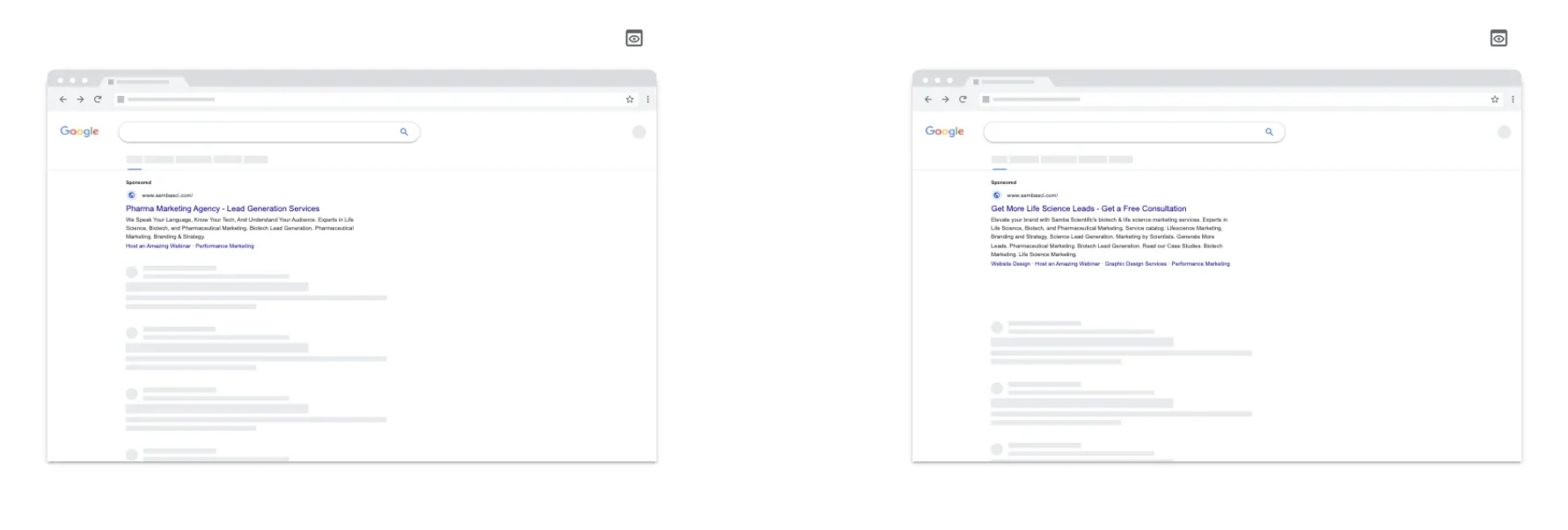
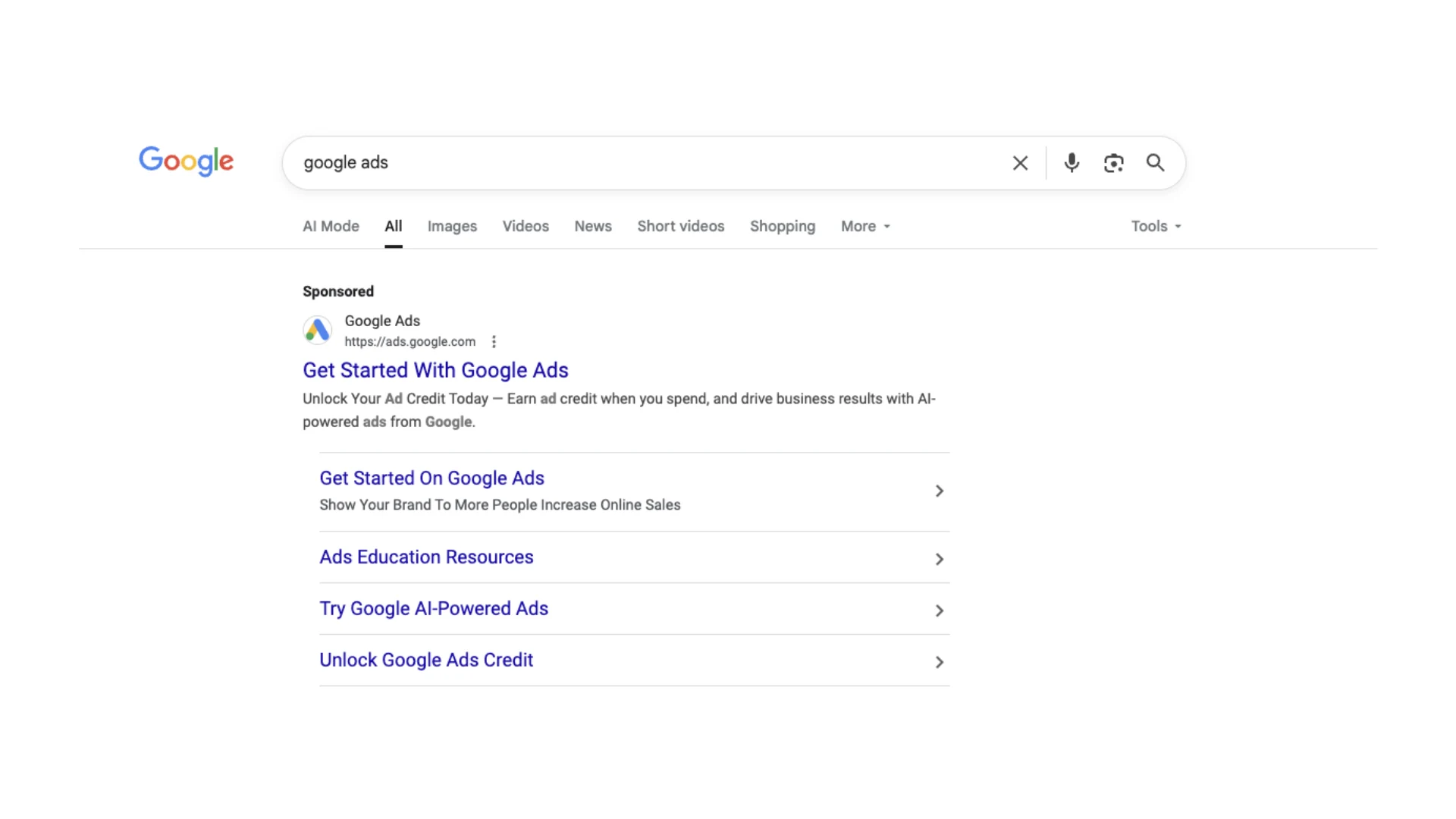
Search Ads appear as text listings at the top and bottom of Google search results. They’re powerful because they capture people who are already looking for what you offer. The challenge lies in identifying the right keywords and crafting compelling ad copy that resonates with the search query.
Biotech companies can achieve remarkable results with Search campaigns, particularly when they perfect their keyword selection. Our guide to reducing cost-per-click in biotech marketing covers how to maximize ROI in your keyword selection and ad monitoring process.
The key advantage of Search Ads for life sciences companies? You’re reaching people at the moment they’re ready to make a decision. They’re actively telling you what they’re looking for with the keywords that they’re using in their search, and you can capitalize on that opportunity.
Display Ads: Creating Brand Awareness and Staying Top-of-Mind
Display Ads work differently. Instead of waiting for people to search for your products or services, these visual ads can appear across millions of websites, apps, and Google properties like YouTube and Gmail based on a variety of audience attributes like interests, previous web activity, and more.
Consider this scenario: A target customer visits your website to browse your products and services but ultimately doesn’t convert on this visit by filling out your contact form. With Display Ads, you can target this person based on their page view, so you stay visible during their decision-making process by showing them your ads as they browse other related sites, watch YouTube videos, or check their email.
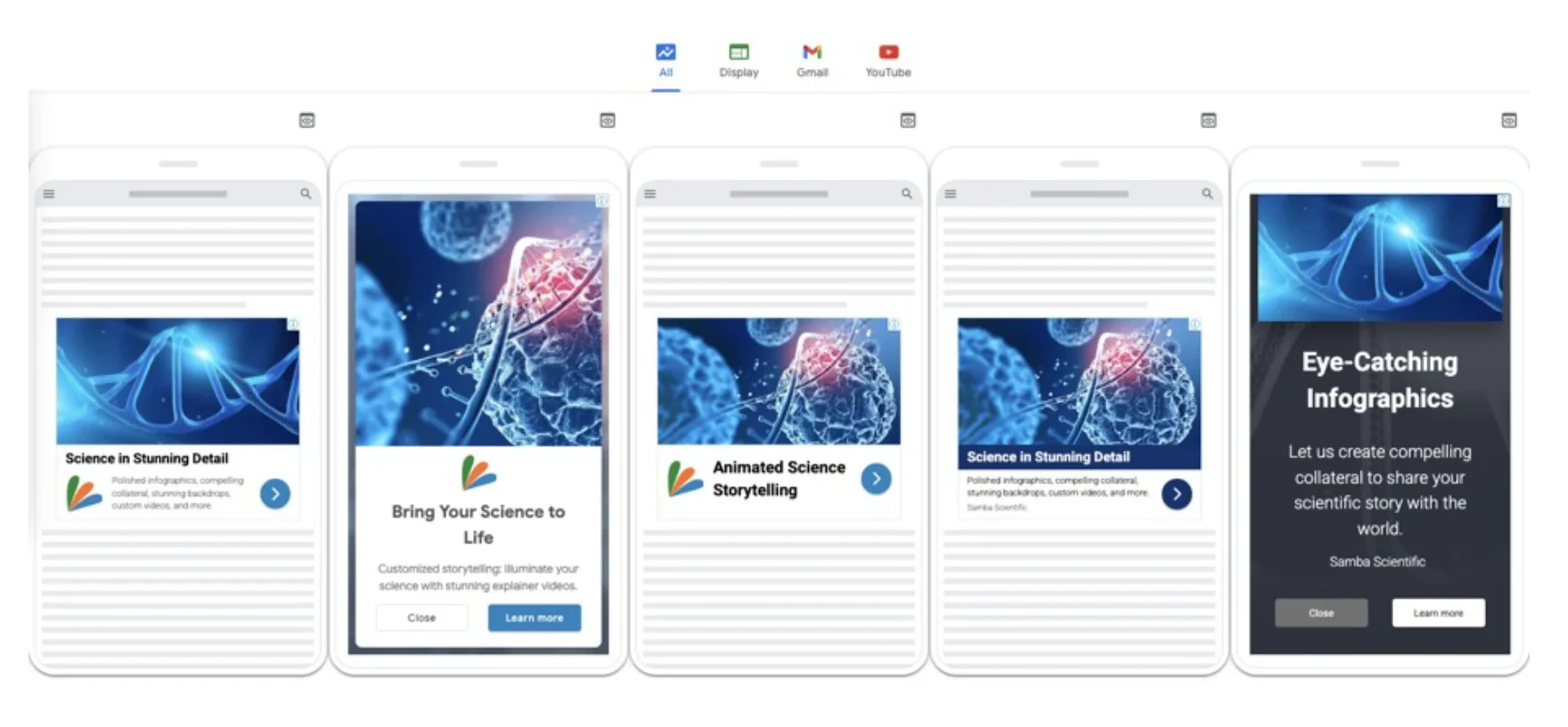
Display campaigns excel at introducing new companies to market, explaining complex scientific concepts through simplified visuals, and maintaining brand awareness among target audiences. They’re particularly valuable for biotech startups or companies coming out of stealth mode that need to quickly build recognition in competitive markets.
When Display and Search Ads are used together, they can create a comprehensive, full-funnel approach that both generates and captures demand.
Beyond the Basics: Other Google Ads Campaign Types Worth Considering
While Search and Display should form the foundation of your ads strategies, Google offers several additional campaign types that can be valuable for life sciences companies.
Video Campaigns: Demonstrating Complex Solutions
Laboratory equipment and biotechnology services often require demonstration. Video campaigns on YouTube allow you to show your products in action, feature customer testimonials from respected researchers, or explain complex scientific processes in an engaging format.
Impressions and views are the main goals here, and the key is creating content that provides genuine value to your scientific audience.
Shopping Campaigns: Perfect for Product-Heavy Businesses
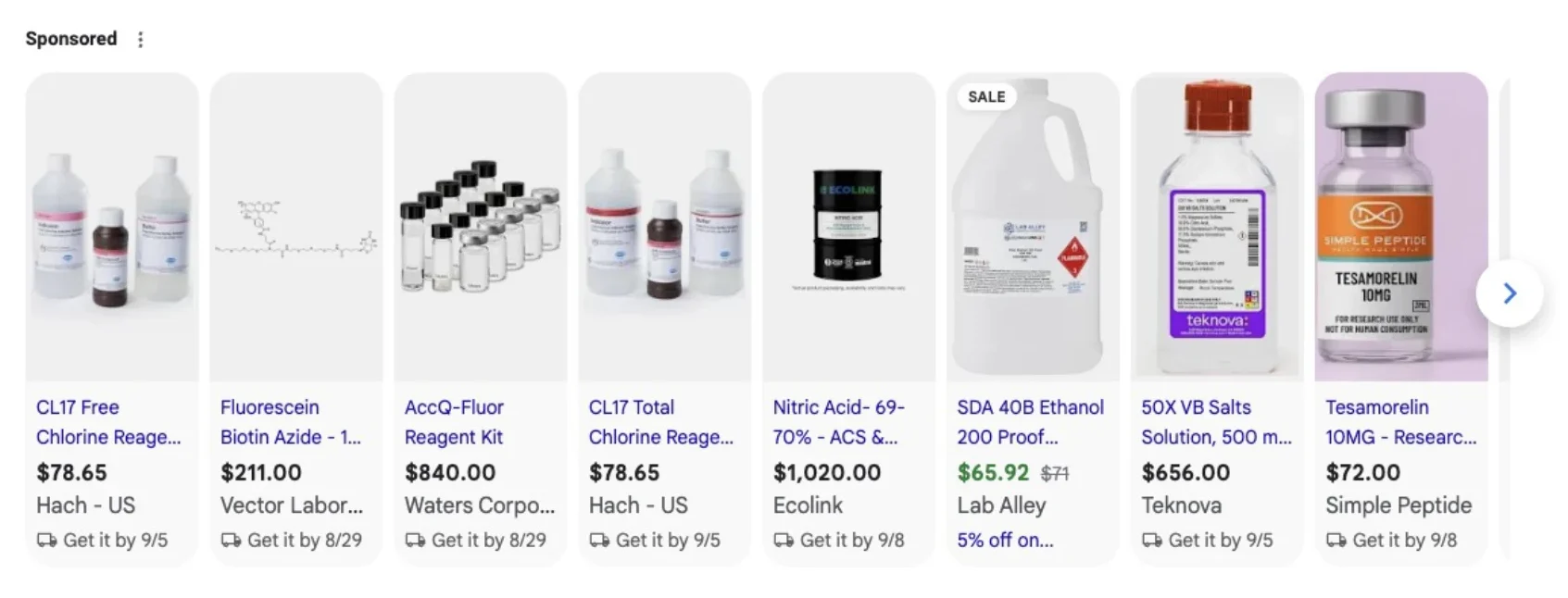
If you sell laboratory supplies, reagents, or equipment with extensive catalogs, Google shopping campaigns can be incredibly effective. These campaigns display product images, prices, and your company’s information directly in search results.
Shopping campaigns can transform your products’ visibility by making them appear for searches that you may have never considered targeting with traditional Search Ads. Plus, potential customers are able to see the product’s key details before clicking through to the website.
Performance Max: Google’s Newest Approach
Performance Max campaigns represent Google’s latest evolution in advertising strategy. These campaigns use machine learning to automatically optimize your ads across Search, Display, YouTube, Gmail, and other Google properties simultaneously.
The appeal is obvious: you can let Google’s algorithms handle the complexity while you focus on your business. However, Performance Max works best when you have substantial conversion data and clear business objectives already, and it can be less transparent than traditional campaign types.
For biotech companies just starting with Google Ads, we typically recommend beginning with Search and Display campaigns to understand your audience and gather data before exploring Performance Max.
Matching Campaign Types to Your Business Objectives
We’re here to help make sure your choice aligns with your goals:
For Lead Generation
Most life sciences companies need qualified leads from laboratory directors, research managers, and other decision-makers. For lead generation, start with Search campaigns targeting high-intent keywords, then add Display remarketing to nurture prospects who didn’t convert immediately.
Case studies consistently show that the keys are continued optimization over time and proper conversion tracking setup from the beginning.
For Brand Awareness
New companies need to build awareness among their target audience. Display campaigns on relevant industry websites, combined with Video campaigns showcasing expertise and innovation, work best for awareness objectives.
For Direct Sales
Companies selling laboratory equipment or supplies benefit from Shopping campaigns for product visibility, supported by Search campaigns for branded and competitor terms. Display remarketing helps convert previous website visitors who need more time to make purchasing decisions.
Building Your Google Ads Strategy
Here’s how to approach campaign selection strategically:
- Start Simple: Launch targeted Search campaigns for your most important keywords and implement Display remarketing for website visitors. Focus on getting these basics right.
- Gather Data: Use initial campaign performance to understand your audience and identify optimization opportunities. Ongoing optimization leads to better results over time. You can also run experiments to test different approaches to find what resonates best.
- Expand Strategically: Once you have solid performance data, consider adding Video campaigns for product demonstrations, Performance Max for comprehensive reach, or Shopping campaigns if applicable to your business model.
The key insight: Successful Google Ads strategies for life sciences companies aren’t about using every available campaign type at once. They’re about choosing the right combination for your specific goals and audience.
Getting Results That Matter
Google Ads success in the life sciences sector requires more than just technical knowledge. The specialized nature of biotech marketing, from regulatory considerations to highly technical audiences, requires expertise that generic marketing agencies simply can’t provide. This is why many life sciences companies struggle with Google Ads until they work with specialists who understand their unique challenges.
At Samba Scientific, our Google Ads management services focus specifically on biotechnology and life sciences companies. We understand the nuances of reaching your audience through targeted advertising strategies that drive real results.
Ready to develop a Google Ads approach that actually works for you? Let’s discuss your specific goals and how we can help you achieve them through expertly managed campaigns.