Key Takeaways:
- A mail-stable sampling card removes the biggest bottleneck in blood-based Alzheimer’s disease biomarkers: getting a usable sample out of the clinic. A card that ships at room temperature replaces cold-chain plasma handling and the need for an on-site phlebotomist.
- A UCSF pilot study picked out early-onset Alzheimer’s disease participants from dried plasma alone. Two of 16 participants were flagged based purely on their biomarker ratio, before their clinical diagnoses were known to the research team.
- The workflow runs on a benchtop qPCR machine, equipment most molecular biology and clinical labs already own. No mass spectrometer or specialized antibody platform is required.
- Early detection depends on reaching populations that current biomarker testing routinely misses. Cost and infrastructure barriers fall hardest on lower-income regions and historically under-studied populations, which is where accessible molecular diagnostics matter most.
Why Is Population-Scale Alzheimer’s Disease Screening So Hard to Achieve?
Blood-based biomarkers have made early detection of Alzheimer’s disease (AD) more achievable than ever, but population-level screening is still limited by cost, logistics, and access to specialized testing infrastructure. Most validated biomarker testing still depends on positron emission tomography (PET) imaging or cerebrospinal fluid (CSF) collection, both of which require expensive equipment, trained personnel, and centralized facilities.
That gap matters most for the populations who carry the largest burden of Alzheimer’s disease and related dementias, including women, people of color, and communities in lower- and middle-income countries.
In a recent webinar hosted by Taudia, Dr. Jennifer Yokoyama, an Associate Professor at the University of California, San Francisco (UCSF) Memory and Aging Center, and Taylor Johnson, a staff research associate in her lab, walked through a pilot workflow built to close that gap. It pairs a dried plasma collection card with Taudia’s ultrasensitive biomarker detection chemistry, run on standard laboratory qPCR equipment.
What Makes Blood-Based Alzheimer’s Biomarkers Hard to Access at Scale?
Dr. Yokoyama holds the Mary Oakley Foundation Endowed Professorship in Neurodegeneration at UCSF’s Edward and Pearl Fein Memory and Aging Center. Her lab studies how genetic variation shapes risk for and resilience to Alzheimer’s disease and frontotemporal dementia across diverse populations. She also serves on Taudia’s scientific advisory board, a role she has said reflects her confidence in the company’s technology.
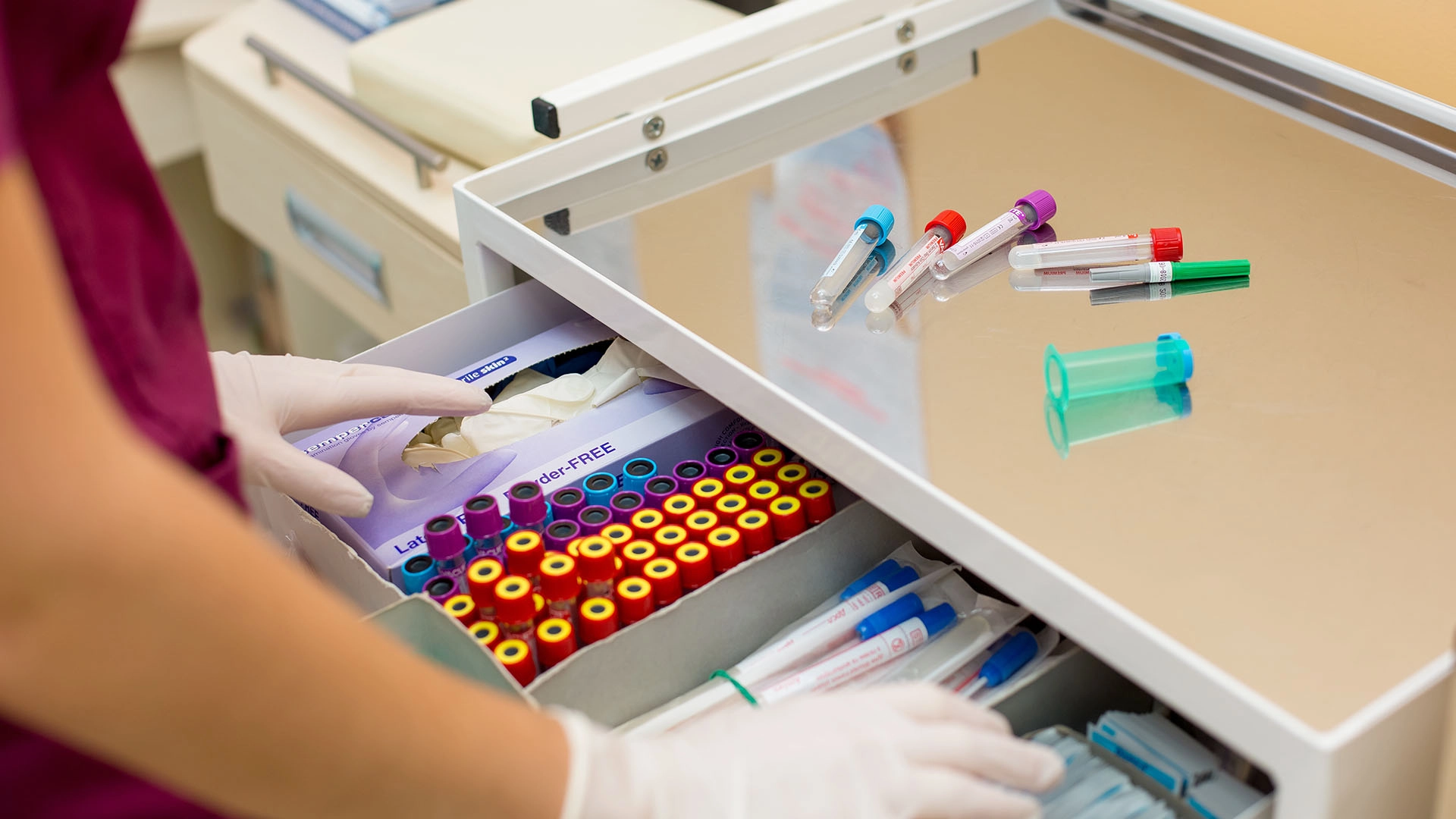
As the field moves toward defining Alzheimer’s disease by its underlying protein biology rather than by clinical symptoms alone, biomarker confirmation is becoming close to a requirement for research and, increasingly, for care. Standard biomarker collection still depends on a mildly invasive blood draw performed by a trained phlebotomist, tight temperature control during transport, and shipping regulations that vary by region. Together, these requirements concentrate access to Alzheimer’s disease biomarker testing around a small number of central labs, leaving broad stretches of the world, and many research cohorts, without a practical way to measure disease biology at all.
How Does a Dried Plasma Spot Capture Alzheimer’s Biomarkers Without a Cold Chain?
Taylor Johnson led the effort to test whether that bottleneck could be engineered around. The team built a three-part workflow: collection, processing, and analysis.
Collection starts with a Capitainer® SEP10 card, a small device with two microfluidic channels that each capture a precisely metered 10-microliter dried plasma spot. A blue dye confirms a successful fill, and the finished card is shelf-stable at room temperature. That means it can go into a standard mail envelope instead of a cold-chain courier, which is what makes remote and international sample collection realistic.
To process a sample, the team eluted the dried spot in a sample buffer and incubated it for 45 minutes at room temperature. That solution behaves like ordinary liquid plasma once it is back in the workflow. From there, it goes into Taudia’s SPLASH™ assay (Solid Phase Ligation Assay with Single wasH), a proprietary chemistry that pairs antibody-based capture with a DNA-based readout. Because the final signal is a short oligo rather than a fluorescent or chemiluminescent tag, it can be quantified on the same benchtop qPCR (quantitative polymerase chain reaction) instrument most labs already use for routine molecular work, rather than a mass spectrometer or a specialized immunoassay platform.
What Did the UCSF Pilot Find?
Over roughly 34 days, the team collected dried plasma spots from 16 participants at the UCSF Memory and Aging Center, drawing from patients who were largely new to the clinic or awaiting a formal diagnosis. The cohort split close to evenly by sex, and it included a mix of samples that had sat at room temperature for less than 14 days and for more than 14 days, giving the team a real-world range to test against.
Quality control and technical performance:
- Assay specificity checked out. Comparing 1x and 4x sample dilutions produced the expected shift in signal, a cycle threshold (CT) shift of 1.5 to 1.7 against a target of roughly two cycles, indicating the assay measured specifically and consistently without bias from the dried-spot collection method itself.
- Every sample produced a usable signal. All 16 participants showed measurable readouts above background for both biomarkers assessed: phosphorylated tau 217 (pTau-217) and amyloid beta 42 (Aβ42).
- Precision was strong within a spot, but less so between spots. Replicate measurements from the same dried plasma disc were tight. Measurements between different discs from the same participant varied more, which the team has flagged as the next target for extraction-protocol optimization.
The result that mattered most came from the ratio of the two biomarkers, which the team used as the clinically relevant readout. That ratio was significantly higher in the two participants ultimately diagnosed with early-onset Alzheimer’s disease than in the rest of the cohort, which included six cognitively normal participants, two with mild cognitive impairment (MCI), four with behavioral variant frontotemporal dementia (bvFTD), and two with primary progressive aphasia (PPA). There were no statistically significant differences among those four other groups. The early-onset AD group’s average ratio was 13.6 times higher than the cognitively normal group’s average, a dynamic range wide enough to start building a diagnostic cutoff around. Both early-onset AD cases were flagged from the biomarker ratio alone, ahead of confirmation through the standard clinical pipeline.
What Still Needs to Be Optimized?
This is pilot data, not a validated diagnostic. The researchers were direct about what remains unresolved:
- Extraction consistency between discs needs work. The team is testing different extraction buffers, including different base chemistries and reducing agents, to bring that variability down.
- Long-term stability hasn’t been formally tested. The 34-day window reflects a grant deadline, not the result of an accelerated stability study, and the team wants to establish how much further that window can be pushed.
- A defined diagnostic range doesn’t exist yet. The 13.6x dynamic range is a promising starting point, but translating it into a validated cutoff for individual patients is still ahead.
What’s Next for Field-Deployable Alzheimer’s Screening?
The team’s next steps include comparing dried plasma spot results directly against native liquid plasma on the same SPLASH™ assay, and expanding the collection method to cover EDTA (a standard anticoagulant tube used for blood collection) and capillary lancet draws alongside the anticoagulated whole blood used in this pilot. That flexibility matters for field teams working outside a standard phlebotomy setup.
Dr. Yokoyama is now pursuing funding for a global feasibility study to test the dried plasma spot workflow with research collaborators in under-resourced settings, including sites in sub-Saharan Africa, South Asia, and Latin America, where population-level biomarker data remains a persistent gap in global Alzheimer’s research. For labs in those settings, a workflow that survives standard postal shipping and runs on equipment already on the bench could be the difference between generating biomarker-confirmed data and being excluded from that research entirely.
What Does This Mean for Accessible Alzheimer’s Disease Biomarker Testing?
A 16-person pilot is early evidence, not proof. It does show something biotech and life science teams working on decentralized diagnostics will recognize: when a molecular assay can tolerate the realities of remote collection and ordinary shipping, it opens research and screening options that centralized, PET- or CSF-dependent testing cannot reach.
For labs and research teams exploring how blood-based biomarkers fit into their own Alzheimer’s disease or broader neurodegeneration programs, this kind of workflow validation data is worth watching closely as it matures toward a defined diagnostic range.
If you’re interested in watching the full webinar, you can find it here.
Want help turning your own research results into content that reaches the right scientific and clinical audience? Samba Scientific’s webinar services help biotech and life science companies plan, promote, and repurpose scientific webinars like this one. Contact us to talk through your next webinar or content strategy.