Key Takeaways
- How large language models discover and surface content
- How to structure your website, content, and off-site presence (LinkedIn, Reddit, YouTube) so that AI engines treat your brand as an authoritative source
- How to identify the high-intent questions that your buyers are already asking AI, and build a content strategy around them
- How to track AI-driven acquisition using GA4, HubSpot, and Bing Webmaster Tools
- Why a strong SEO foundation is still essential for visibility
Bonus: We’ll also share how one client doubled their AI brand mentions in just six months.
Whether you’re just starting to think about AI search or sharpening an existing strategy, you’ll leave with practical, life science-specific tips for getting your brand cited where it matters most.
Abstract
The way that buyers discover biotech and life science companies is changing fast. When someone asks an AI chatbot which CRO to trust or which platform leads in a specific research area, the brands that get cited aren’t always the ones with the highest Google rankings: they’re the ones with a digital presence that AI prefers.
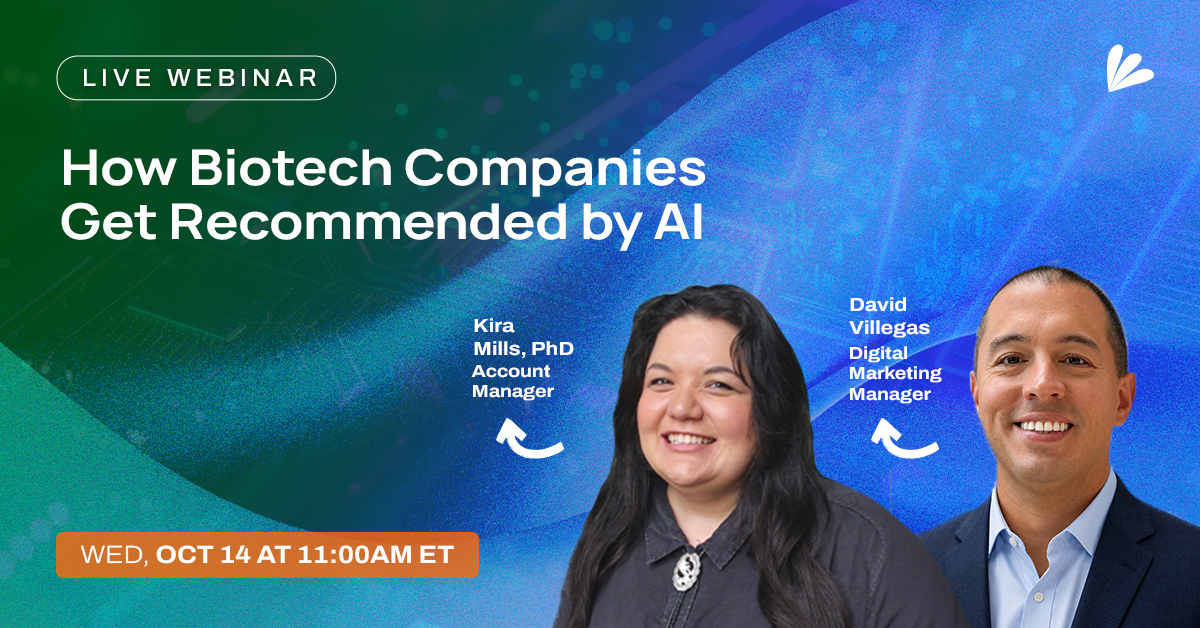
In this webinar, a digital marketing strategist and a PhD account manager will team up to break down Generative Engine Optimization (GEO) and Answer Engine Optimization (AEO), as well as what they actually look like in practice for biotech and life science companies. We’ll go beyond the buzzwords to share real strategy examples that your team can start applying right away.
Share with your network
Speaker
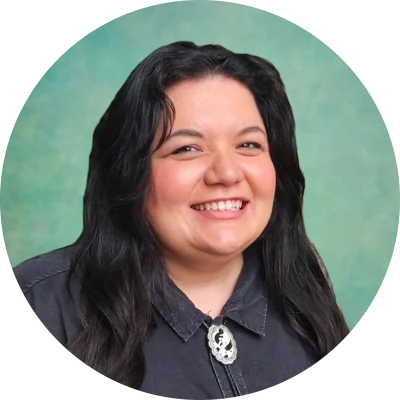
Kira Mills, PhD
Account Manager
Kira holds a Ph.D. in biochemistry and has several years of research experience in both wet and computational labs. She now uses that experience to translate scientific concepts to various audiences in accessible and creative ways, aiding clients with their inbound marketing strategies.
Speaker
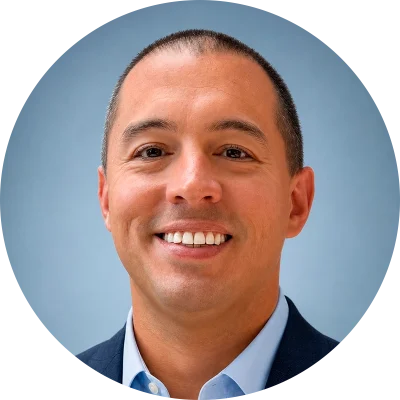
David Villegas
Digital Marketing Manager
With more than a decade of digital marketing experience, David specializes in data-driven paid media, SEO, analytics, and AI search strategies for biotech, life science, and technical B2B brands. He helps companies turn complex products and marketing data into smarter strategies that increase visibility, reach the right audiences, and drive measurable growth.
Speaker
Kornelia Neveling, PhD, is a scientific researcher at the Human Genetics department at the Radboud UMC in Nijmegen, the Netherlands. She earned her degree in Biology at the Heinrich-Heine-University Düsseldorf, Germany. Subsequently, she performed her PhD in Human Genetics at the Julius-Maximilians-University Würzburg, Germany, investigating the molecular causes and consequences of genetic instability syndromes, with a special interest in Fanconi anemia. In 2009, she started as a postdoc at the Dept of Human Genetics of the Radboud UMC, where she learned all about NGS. From 2011-2018 she worked at the sequencing facility and since 2018 she joined the Translational Genomics group, both at Genome Diagnostics Nijmegen. Kornelia’s main interest is in the implementation of new technologies into diagnostic routines, with long-read sequencing and long read optimal mapping being her current passion.