Many life science companies approach a website redesign the wrong way: their strategy starts and ends with a mood board.
They gather screenshots of the competitors’ websites that they admire, pick some new accent colors, and then hand the project over to a designer along with a quick brief and thumbs up. Six months and a significant budget later, they have a site that looks different, but they quickly realize that it performs about the same. Leads don’t increase. Investors still can’t find what they need. Scientists bounce before reaching the pipeline page. ROI is non-existent.
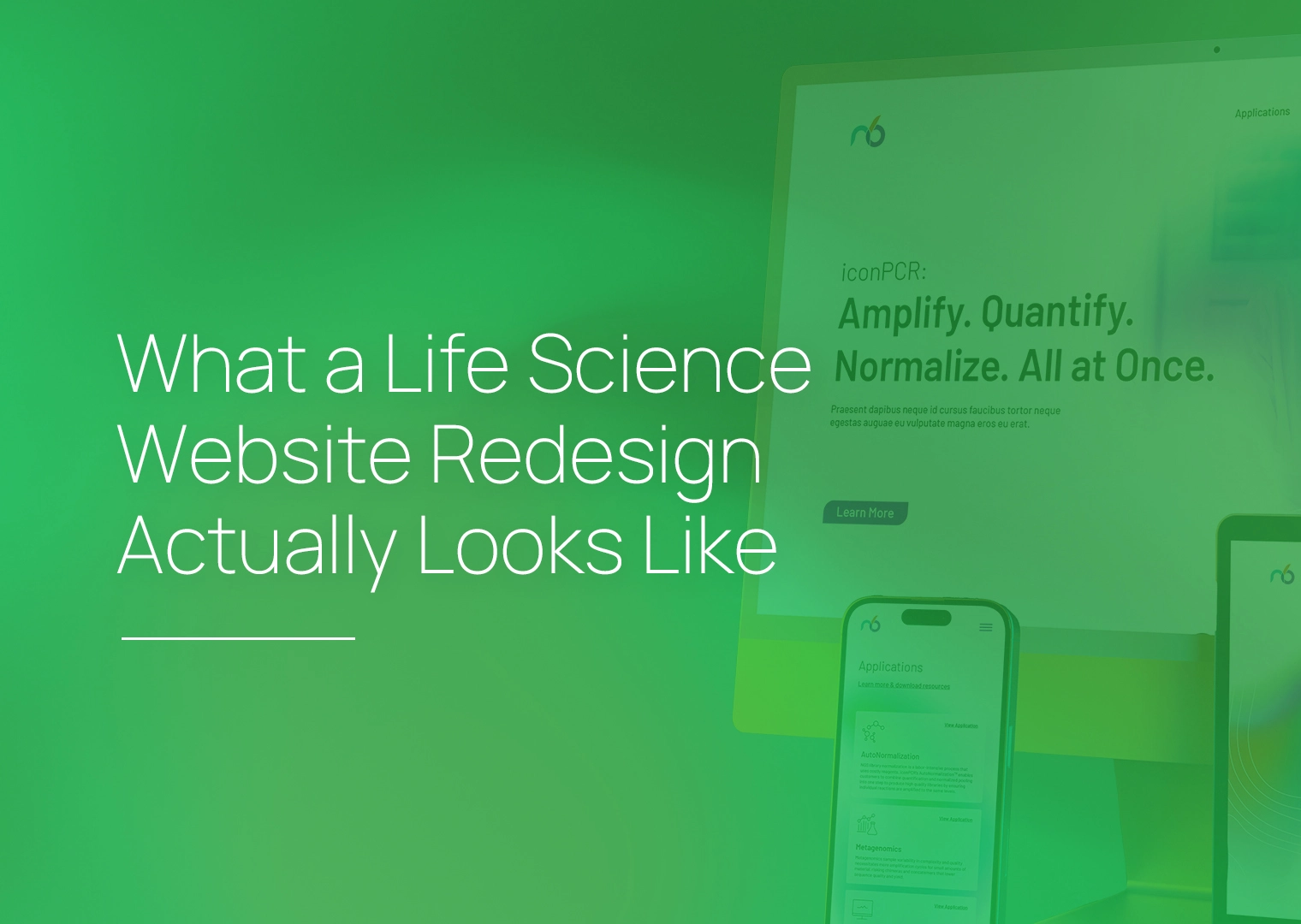
A life science website redesign isn’t simply a visual refresh. Your website is a strategic communication asset that has to work as hard as your science does. Here’s what a successful life science website redesign actually looks like (with case studies for proof).
Key Takeaways
- Audience segmentation is foundational to good web design.
- Your content should be both technically accurate and easily digestible.
- Website design elements should be consistent, custom, and accessible.
- The technical foundation of your website influences user experience and visibility.
- Define success metrics before the redesign so that you know what to monitor post-launch.
Strategy That Sets the Stage
Before a single wireframe is sketched, the most important question is: what does this site need to do?
At Samba, we always start with strategy because life science websites don’t just need to look cool and load quickly. Your site needs to convince a potential pharma BD partner that your platform is worth a conversation, give an investor enough confidence to take a meeting, or reassure a PhD-level job candidate that your culture is worth joining. These individuals are not the same user, they’re not looking for the same things, and none of them will stick around on a site that makes them hunt for what they need.
Audience segmentation is foundational to good website design. Map your distinct user types (e.g., researchers, clinicians, investors, BD partners, job seekers) and define what each one needs to find, feel, and do before they leave. That clarity drives every decision that follows: content, design, navigation, and calls to action.
➔ Case study: Modern branding and website development with customer-focused features
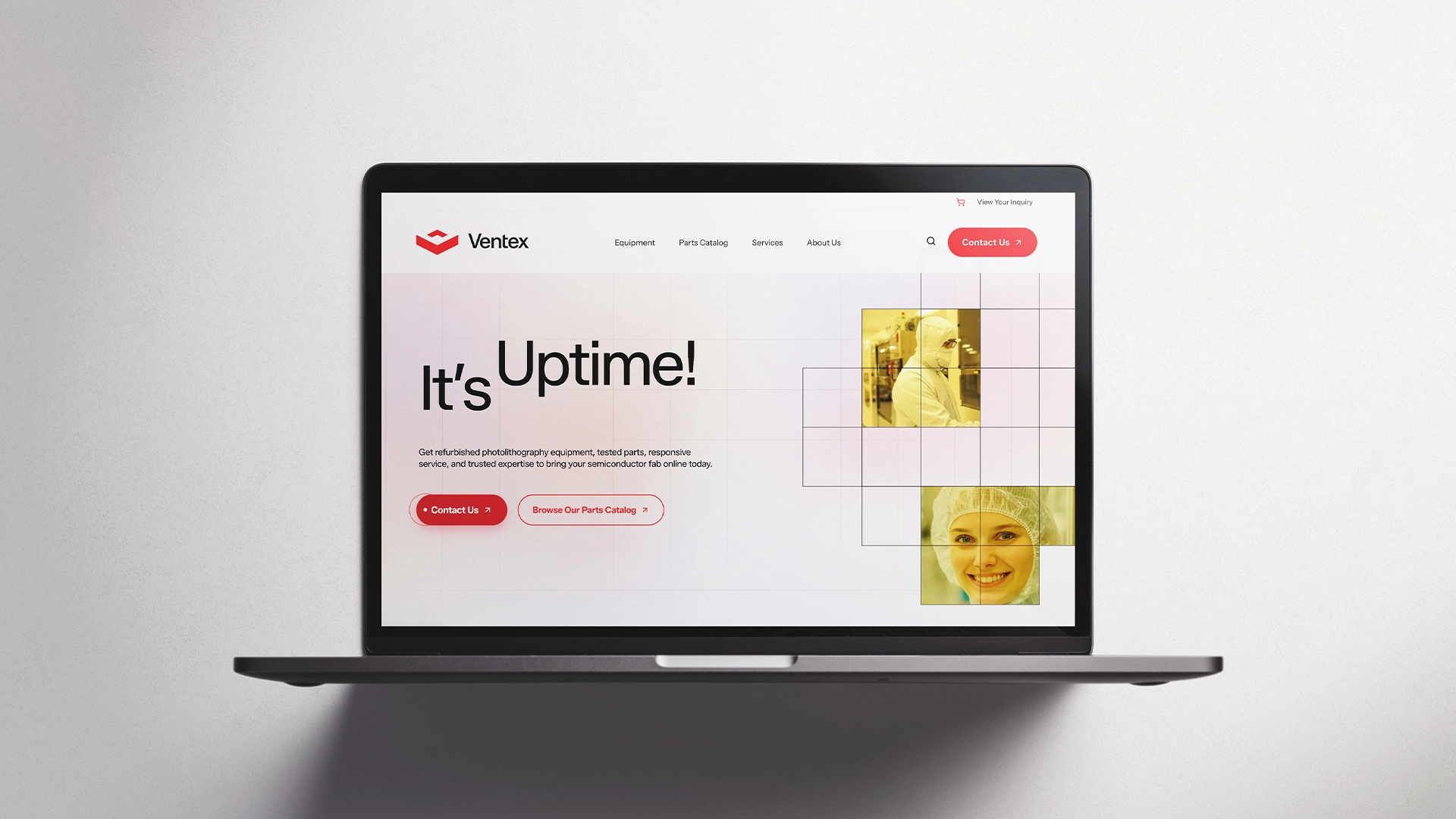
A competitive audit can help here, too. Where does your brand sit in the landscape? Are you the rigorous, data-first platform company? The scrappy clinical-stage upstart with a bold mechanism? Your site should make that positioning unmistakable within the first scroll and maintain this identity consistently across pages and posts.
Content That Earns Credibility Without Losing Readers
When undergoing a website redesign, you should take time to consider your current website content. What’s working? What resonates, and what could be updated or improved? How should content on one page tie to further information on another?
Simple wireframes are key at this point – avoiding getting lost in design elements allows you to focus on the messaging. Think about the goal for each page, then repurpose existing content that works, and rework or remove content that doesn’t. This is also a great time to fill in gaps that you might not have been aware of when your website initially launched.
Your more technical pages need to tell a clear scientific story that is specific enough to be credible, while also structured enough that a non-specialist can follow the logic. Those two ideas don’t have to be mutually exclusive. Scientifically accurate text can be paired with clear visuals like infographics or workflow diagrams to make the information accessible to a wider audience (like potential investors who probably don’t have PhDs).
Proof points should be woven throughout your content, not siloed on a publications page that nobody visits. Highlight your peer-reviewed data near your platform claims. Put regulatory milestones close to the pipeline. We also recommend leveraging case studies and testimonials to show how your technology solved common pain points and include credentials and bios on your Team page for extra credibility.
When imagining user journeys, you should also be adding in thoughtful opportunities for conversion – downloadable spec sheets or case studies for those who are still gathering information as well as contact forms for users who are ready to take the next step. Additionally, your website should be optimized for mobile users so that anyone can easily navigate your site, no matter what device they’re scrolling on.
➔ Case study: Lead generation, ads, SEO, and long-term marketing growth
Design That Does More Than Look Good
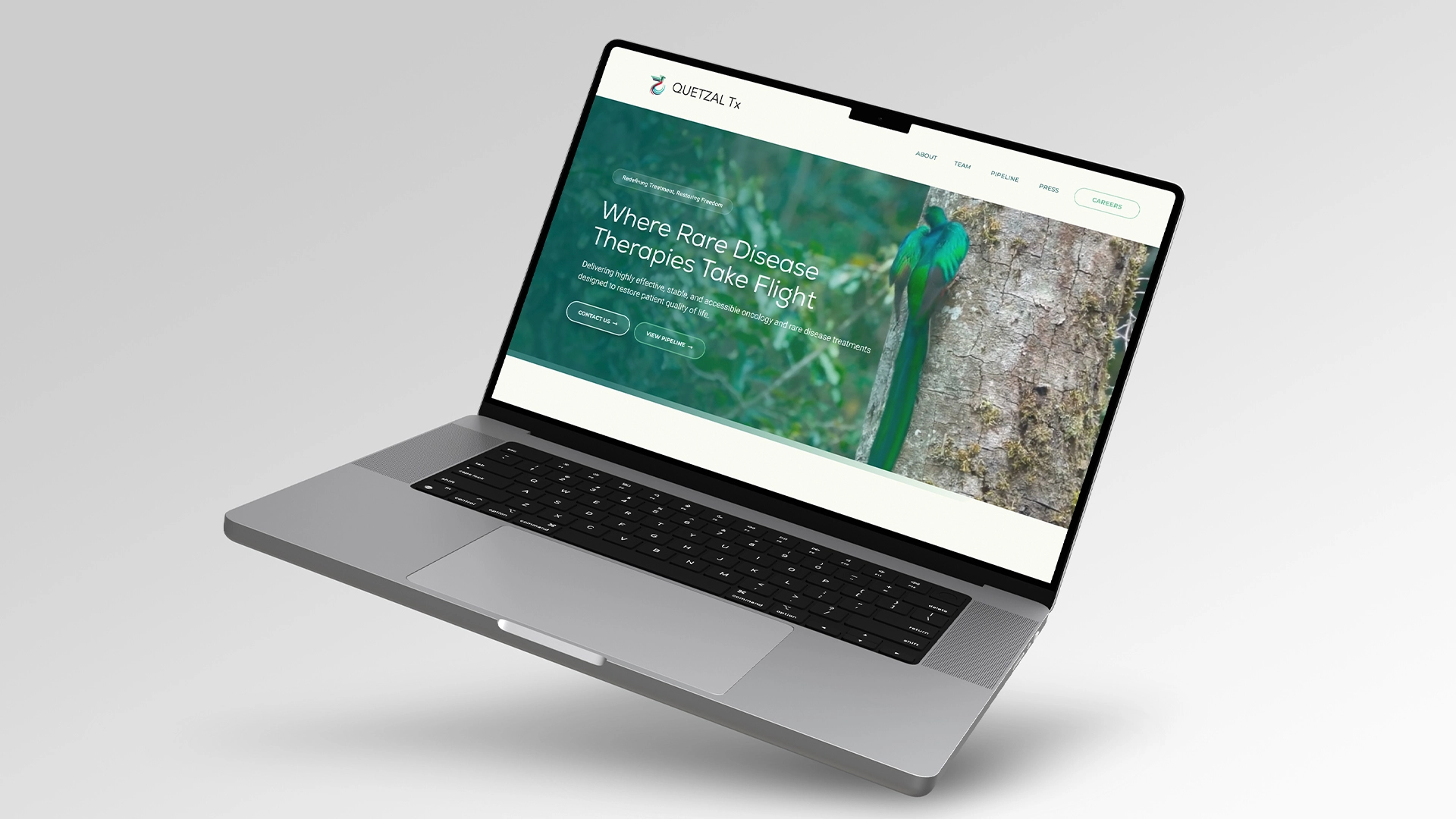
Your science is groundbreaking, and you need a website that showcases your brand in a clear, memorable way that’s distinct from your competitors. You want to draw your visitors in with a balance of compelling content and high-quality imagery that reflects who you are and what you do.
Generic stock photography of anonymous scientists pipetting clear liquid into other clear liquid isn’t going to cut it. Custom photography, illustrated system diagrams, and original mechanism-of-action graphics or animations communicate that you understand your own science well enough to explain it visually, which boosts credibility.
Design system consistency (including typography, color usage, spacing, and iconography) is what separates a polished site from one that looks like three different agencies built it in stages. It also has a practical upside: a well-documented design system makes future updates faster (and cheaper!).
While making sure that everything looks good, don’t skip accessibility. WCAG compliance is increasingly expected by institutional partners and is often required for companies working with government or healthcare adjacent audiences. It’s also just the right call.
➔ Case study: A thoughtful rebrand to reflect a changing industry
Technical Foundation That Earns Trust
Page speed is another credibility factor. If an investor checking out your site on airport WiFi has to wait four seconds for your homepage to load, they’ve already formed an opinion about your organization. (Spoiler: It’s not a good one.)
SEO architecture, which includes proper heading hierarchy, metadata, and schema markup, matters especially for scientific and medical content, where search intent is specific and competition for visibility is real. A redesign that doesn’t address SEO continuity from the old site can tank rankings that took years to build – 404 errors are a major loss. GEO and AEO are also essential to keep in mind as you restructure old content or add new content so that you stay visible in the changing search landscape.
➔ Case study: Boosting organic visibility and lead generation with strategic SEO
Your CMS should empower your marketing team to publish content, like blogs or news posts, so that your digital presence can remain fresh without the website breaking. Your site should integrate cleanly with HubSpot, Salesforce, or whichever CRM your team uses for lead capture (because a beautiful form that doesn’t connect to your pipeline is just decoration). Setting up Google Tag Manager is also essential for gathering data on user journeys and page popularity to guide future website updates.
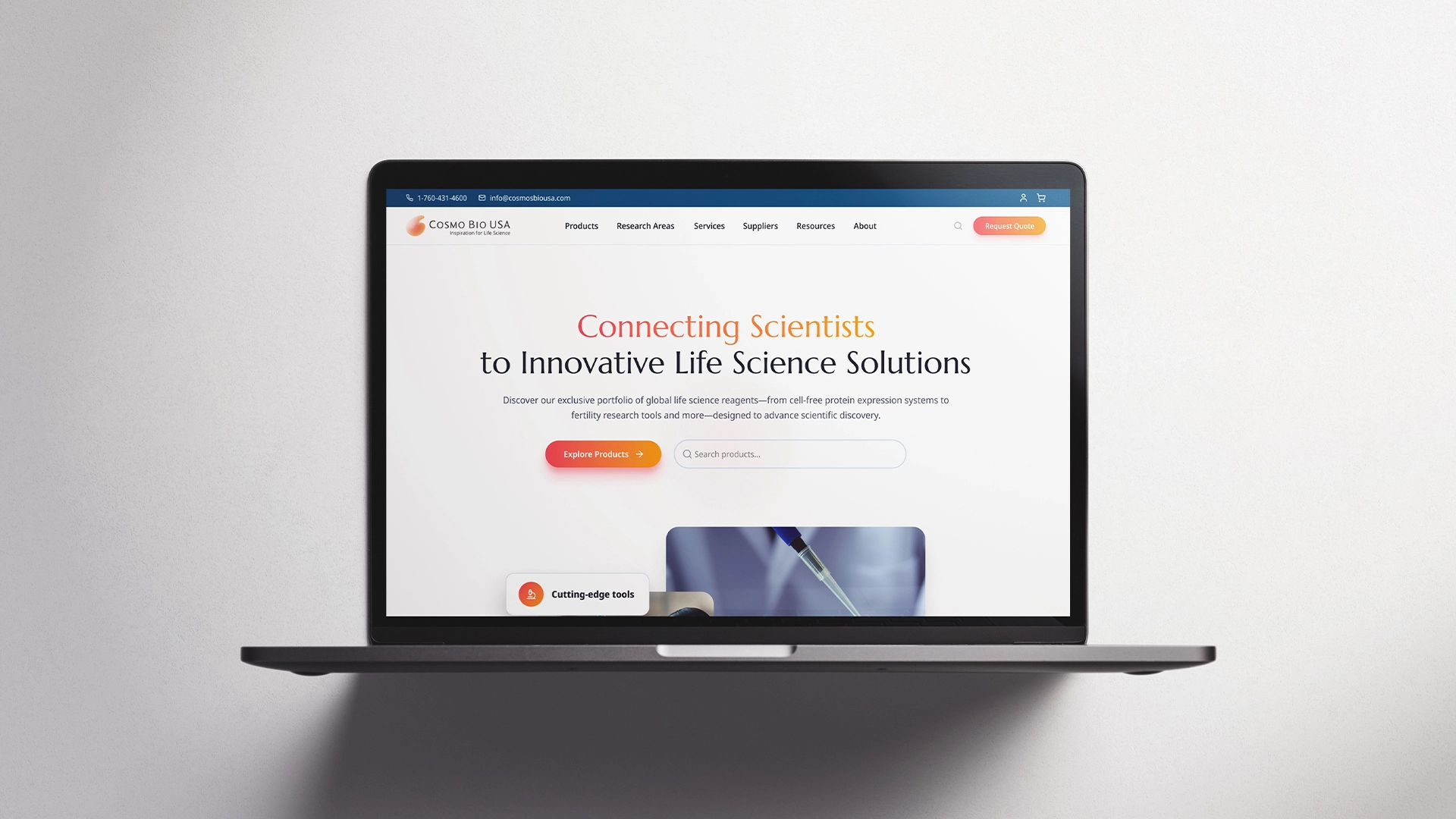
➔ Case study: Growth acceleration for an NGS instrument company
The Launch Is the Beginning, Not the End
Post-launch analytics setup is where we see a lot of teams drop the ball. If you can’t measure website visits, scroll depth, or form fills by source, you don’t actually know if the redesign worked. Define success metrics before launch, not after, and make sure that your systems talk to each other to collect accurate data.
We also recommend building a content roadmap alongside the site to maintain your momentum. A redesign that goes stale six months later (no new blog posts, news sections frozen in Q3 of last year, or a pipeline page that still shows a Phase 1 trial that you completed two years ago) sends its own message. You don’t want your visitors to think that you’re inactive or outdated, especially in an industry that moves so quickly.
Conclusion
A life science website redesign done right is a significant investment (which it should be!). Your site is often the first place that a potential partner, investor, or recruit encounters your science. The question isn’t whether you can afford to do it well – it’s whether you can afford not to.
Not sure where to start with redesigning your brand’s website? Our team is ready to help. Let’s talk.