What Is Life Science Content Marketing?
Life science content marketing is a strategy focused on creating and distributing valuable, relevant content that attracts and educates your target audience rather than interrupting them with traditional advertising. At Samba Scientific, we define it more specifically: it’s about getting the right technical content in front of researchers, scientists, and decision-makers at exactly the moment they’re evaluating solutions in your category. Instead of promoting a product outright, content marketing puts useful information in front of the right people at the right time, building trust and credibility over time.
In the B2B world, this means publishing insightful blog posts, white papers, videos, webinars, case studies, and other content that directly address the challenges your target audience faces. When done well, content marketing turns your company into a trusted resource and turns curious visitors into qualified leads.

What's unique about content marketing in the life sciences?
Life science buyers are not typical consumers. They’re researchers, scientists, and technical decision-makers who scrutinize claims, demand evidence, and take the time to evaluate solutions. Generic marketing content doesn’t resonate with this audience.
Here’s what makes life science content marketing different:
- Your audience is highly educated and deeply skeptical. PhD-level researchers and lab managers expect technical depth. Fluffy marketing copy without substance will lose them immediately. Content needs to educate, not just persuade.
- The sales cycle is long and involves multiple stakeholders. Life science purchases, whether instruments, reagents, CRO services, or software, often involve multiple stakeholders and extended evaluation periods. Content must support buyers through every stage of that lengthy journey.
- Trust is built through evidence-backed scientific credibility. Before a prospect will consider a purchase, they need to be reassured that your product or service will do what you say it will. Data, application notes, and peer-reviewed references aren’t nice-to-haves; they’re expected.
- Cold outreach is impersonal and increasingly ineffective. Instead of chasing prospects who haven’t shown any interest, content marketing gives them reasons to find you. Then, once they’re in your funnel, you can nurture them with relevant assets and guide them toward the sale.

How do you create an effective life science content marketing campaign?
A strong life science content marketing campaign is built around your buyer’s journey: meeting prospects where they are and giving them what they need to take the next step.
Here’s the framework that we use at Samba Scientific:
Step 1: Define your ideal lead
Before creating a single piece of content, get clear on who you’re trying to reach. What job titles do they have? What industries are they in? What level of technical expertise does your buyer have? Building a lead scoring model based on demographic criteria like seniority and advanced degrees, combined with online behavior like content downloads and email clicks, helps your marketing and sales teams stay aligned on what a “good” lead actually looks like.
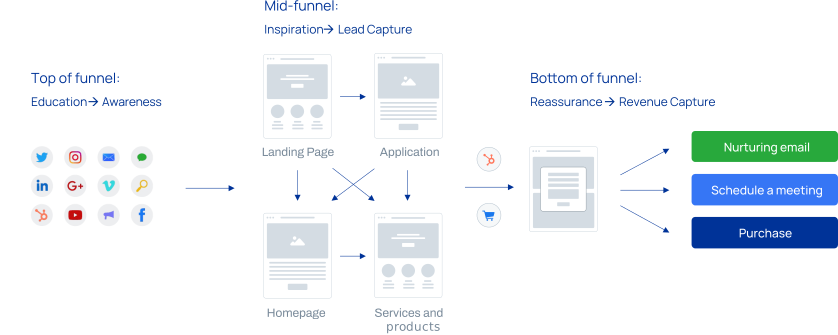
Step 2: Map content to the buyer’s journey
Different funnel stages call for different content. Here’s how to think about it:
Top of funnel (Awareness): Short, accessible content works well to educate and build awareness. This could include blog posts, short videos, infographics, and paid search ads. The goal is to show prospects that you understand their pain points and can help solve them.
Middle of funnel (Consideration): More substantive content helps prospects evaluate their options. Animations, explainer videos, and webinars work well here, offering enough depth to build genuine interest without overwhelming your leads.
Bottom of funnel (Validation): This is where you close the credibility gap. Case studies, application notes, white papers, and detailed technical documentation reassure potential buyers that your solution will perform as promised and solve their pain points.
Step 3: Capture leads and nurture them
Valuable content should be gated behind lead capture forms so that you can follow up. Once a prospect downloads a resource or attends a webinar, automated nurture sequences deliver additional relevant content over time. This progressively builds their lead score and guides them closer to a personal sales conversation.
A typical cadence might look like…
- Prospect downloads a case study
- They receive a follow-up email a few days later offering a related webinar or infographic
- Prospect engages with the content
- Their lead score increases
- When enough points are reached, they’re classified as a Marketing Qualified Lead (MQL)
Here’s how steps 2 and 3 come together:
Still have questions? Watch our inbound marketing webinar for a deeper dive:
What types of content work best for life science audiences?
Different formats serve different purposes across the funnel stages. Here’s a quick reference.
| Content Type | Funnel Stage | Best For |
| Blog Posts | Top | Awareness, education, SEO and GEO |
| Infographics | Top | Quick, shareable concepts |
| Explainer Videos | Mid | Visual product/process demos |
| Webinars | Mid | Deeper engagement, lead capture |
| Application Notes | Bottom | Technical proof of performance, lead capture |
| White Papers | Bottom | Thought leadership, lead capture |
| Case Studies | Bottom | Social proof, validation, lead capture |
How does Samba Scientific approach life science content marketing?
Samba Scientific was founded by scientists-turned-marketers, which means that we speak your audience’s language fluently. We don’t just create content; we build integrated inbound marketing programs that combine strategy, scientific writing, design, paid media, SEO/GEO, and marketing automation to generate a consistent pipeline of qualified leads for life science companies.
Our approach follows a proven three-phase model:
Phase 1: Build
Develop core content assets, establish lead capture infrastructure, and launch initial campaigns to drive traffic and early conversions.
Phase 2: Optimize
Analyze what’s working, improve landing page conversion rates, align ad creative with content, and reduce cost per lead as SEO and GEO gains accumulate.
Phase 3: Scale
Once the funnel is dialed in, increase investment in high-performing channels to drive significant volume growth at efficient costs.
Schedule a free consultation with our experts to learn more about how Samba Scientific can help empower your inbound funnel with content marketing.
Frequently Asked Questions
What's the difference between content marketing and inbound marketing?
Content marketing and inbound marketing are closely related but not identical. Content marketing refers specifically to the creation and distribution of valuable content. Inbound marketing is the broader strategy that uses content as its engine, while also encompassing SEO and GEO, lead capture, email nurturing, CRM automations, and more. Think of content marketing as a key component of a full inbound marketing program.
How long does it take to see results from life science content marketing?
Content marketing is a long game. Most organizations begin seeing meaningful lead generation activity within three to six months of consistent effort. SEO and GEO gains typically take six to twelve months to compound. The payoff, however, is sustainable: unlike paid ads that stop the moment you end your spending, strong content continues to attract and convert long after it’s published.
Do I need to gate my content behind lead capture forms?
Not all content needs to be gated. Top-of-funnel content (like blog posts) is typically ungated to maximize reach and boost SEO/GEO benefit. Higher-value assets, including white papers, webinars, application notes, are often gated to capture contact information and initiate nurture sequences. The right mix depends on your goals and funnel stage.
What makes a good life science blog post?
A strong life science blog post addresses a specific question or pain point that your buyer is actually searching for, is written with genuine technical authority, and includes a clear next step (such as a related resource, a CTA, or a form). It doesn’t need to be a dissertation, but it does need to be credible and substantive enough to earn the trust of a technical reader.
How do I know if my life science content marketing is working?
Key metrics to track include organic website traffic, content downloads, form conversions, lead scores, marketing qualified lead (MQL) volume, cost per lead, and ultimately the pipeline and revenue influenced by marketing. A good marketing automation platform (like HubSpot) will tie these metrics together and show you which content is driving results so that you can continuously optimize your strategy based on what works.
Can content marketing work for a small life science company?
Absolutely! In fact, content marketing often levels the playing field for smaller companies because a single genuinely helpful, well-optimized piece of content can outperform a large competitor’s generic messaging. Starting with a focused set of high-quality assets in one or two different content formats is often more effective than spreading too thin across every channel at once.
Does Samba Scientific write the content, or do we need to provide it?
We do both, depending on what works best for your team. Many clients provide subject matter expertise in some capacity, whether it be through interviews, internal docs, or draft materials, and we handle the writing, editing, design, and distribution. Others prefer a fully managed approach where we drive the entire content development process from strategy to publication. We can work with you in whatever capacity makes sense.