The biotechnology and life sciences sector was using AI before AI was cool. But being at the forefront of innovation doesn’t just mean leveraging machine learning tools to accelerate academic research and empower scientific discovery. It’s also about boosting productivity and creativity.
At Samba Scientific, we know a thing or two about creativity — read on to learn how we’re using artificial intelligence as a powerful catalyst for more effective, efficient, and targeted B2B marketing strategies.
But there’s a flip side — AI isn’t always so intelligent. It’s like a smart-ish intern with a little too much ambition. Learn how we manage AI tools to harness the good and train out the bad.
Key Takeaways
AI can be leveraged in biotech marketing to improve efficiency and free up marketers to focus on strategy and relationship-building.
Marketers can use AI for competitive analysis, content creation, and enhanced data analysis and audience segmentation.
It’s important to maintain a human touch in biotech marketing, as there are technical nuances that AI can miss.
The AI Revolution in Biotech Marketing
Science is all about data. Science marketing is no different. Unfortunately marketing in the biotech space is often left to creatives or to scientists turned creatives, who spend all their time wrangling complex concepts for equally sophisticated audiences, while trying not to lose an ounce of accuracy or credibility. That leaves very little bandwidth for actually diving into marketing data or dreaming up something truly fresh.
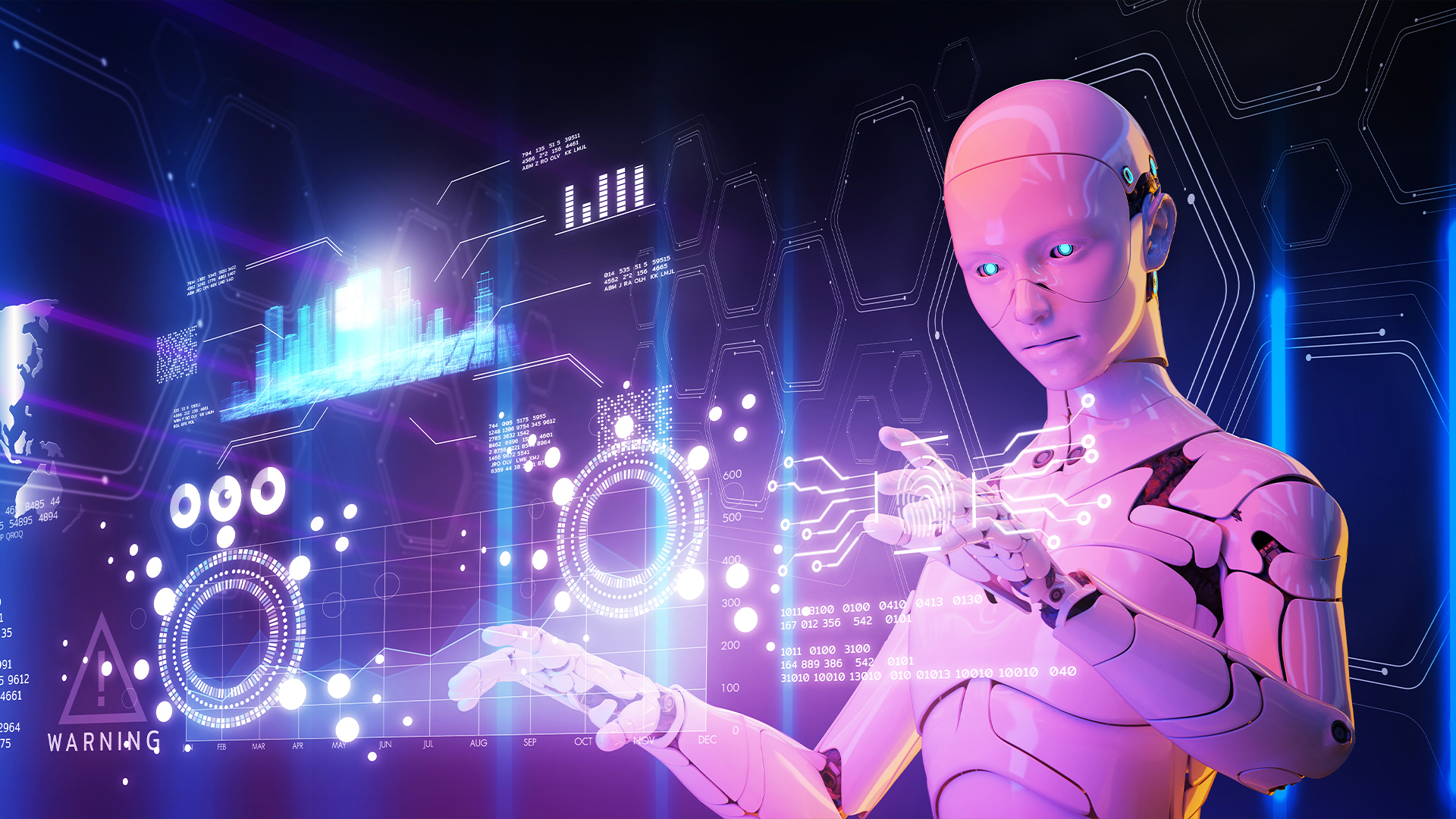
Enter AI. Instead of replacing humans (despite what the doomsday headlines say), AI works best as a brain-boosting sidekick. It can chew through mountains of information, spot patterns, and handle repetitive tasks at warp speed — freeing us scientists-turned-marketers to focus on strategy, creativity, and the relationship-building moves that still make or break a B2B biotech deal.
Practical AI Applications Delivering Real Value
Competitive Intelligence at Light Speed
One of the fastest wins for AI in biotech marketing is competitive analysis.
The old way: Weeks of combing through web sites, annual reports, social feeds, and collateral.
The new way: AI provides the same intel in a few hours – and then continuously monitors competitor activities, funding announcements, patent filings, and emerging market trends.
For instance, we recently conducted a full-scale competitive analysis for a client in the biomanufacturing space. Using a combination of AI tools (we like Claude, ChatGPT, Gemini, and Google AI Studio), we investigated messaging, advertising spend, marketing collateral, SEO, and social media presence across 11 different competitors (including Lonza, Thermo, Charles River, and Millipore Sigma).
In addition to generating results orders of magnitude faster, the use of AI enabled us to remove the bias that would have been inherent from anyone drinking the company Kool-Aid. As a result, we were able to identify a multifaceted differentiation strategy that including brand voice and visuals, website structure, content plan, social media calendar, and keyword strategy.
Here’s the catch: this is not a “Hey ChatGPT, analyze my competitors” situation. We still had to feed the AI custom templates, train it on what to look for, add checkpoints for course correction, and refine prompts along the way. Because in marketing (just like in science), garbage in = garbage out.
Content Creation and Scientific Communication
When’s the last time you read something written by a real human? Besides this article of course…right?
We all know AI can write, and it can write well. What’s more, it can mimic voice and do primary research for written content. It’s even pretty smart at writing about science — until it’s not.
Artificial Intelligence tools will straight up pull information out of thin air and make things up.
Untrained, it’s a scientists’ nightmare when it comes to writing. Tell it to spin up social based on a publication, and it will introduce stats that are nowhere to be found in the paper. Ask it to write an article based off of a recorded interview, and it will engineer fake quotes. Oh — and if you don’t tell it not to, it’s going to put emojis everywhere.
Caution is the word when writing with AI. Nonetheless, we use it all the time — we’re just extremely careful about how. AI excels at generating content outlines, coming up with alternative taglines or product names, editing down copy that is too long, making emails punchier (or less grumpy), rewriting content for different audiences, and spinning up 20 different options of ad headlines to choose from.
The key lies in understanding AI’s role as a starting point, not an endpoint. While AI can quickly generate a thorough outline for a white paper on novel therapeutics, it takes human expertise to ensure scientific accuracy. There is also nuance when it comes to addressing audience pain points that separates effective biotech marketing from generic AI-generated marketing speak.
True magic happens when scientists-turned-marketers transform AI-generated starting points into polished content that is not only accurate but compelling. If you use AI as your personal writing sidekick, it will also get better at understanding nuance and mimicking voice, resulting in a solution that is scalable—so you can generate more content, faster, without skimping on the scientific credibility and authenticity that’s essential for success in this sector.
Marketing Data Analysis & Enhanced Targeting
We already talked about analyzing competitors with AI. Artificial intelligence tools are also great for digging into your own marketing data and your prospective customers (in a non-creepy way, of course). Here are a just few examples of how we’ve used AI for marketing data analysis:
Export data from Google Ads and ask AI to propose new Ad Groups that more effectively use ad budget based on keyword cost and performance
Export deals data from HubSpot and ask AI to determine which KPIs are true leading indicators for revenue and calculate close rate, average deal size, and average time to close
Analyze social channels for what messaging, keywords, or formats lead to the most interactions
Bonus: a lot of this is already baked into the tools you’re using. Google Ads’ machine learning can now optimize bidding and target niche audiences like “spatial transcriptomics specialists” or “genomics researchers,” so you don’t have to pay for clicks from someone searching “what is PCR.” HubSpot’s predictive lead scoring can tell you who’s most likely to bite, while automated workflows, personalized sequences, and email writing tools make sure those highly technical prospects get the right message at the right time.
Web Development
AI in web dev is moving fast. Developers are already using it to help write custom code faster, and there are early-stage tools promising “push button, get website.”
We’re still in testing mode here at Samba (because we like our websites to actually work), but watch this space as things evolve.
Graphic Design
Just… no.
If there’s one thing AI consistently flunks, it’s graphic design. It takes forever to get something that’s even passable, and even then, it’ll probably give your scientist three left thumbs.
Take the time that AI saves in analysis, writing, and development to pay a talented, human designer— or better yet, borrow one of ours. You (and your customers) will thank us.
The Critical Human Element
Even with all the bells, whistles, and “wow, that’s creepy accurate” moments AI can deliver, really good biotech marketing still requires a human touch. AI can generate a list of key opinion leaders in oncology, but it takes real human experience to understand the nuanced relationships between different research groups, the implications of various claims, and the cultural factors that influence decision-making in different markets.
The winning formula isn’t “AI vs. humans.” It’s “AI does the heavy lifting, but humans make the calls.” Use AI for the repetitive, data-heavy work—crunching numbers, drafting outlines, analyzing campaigns—but keep humans steering the strategy, bringing the creativity, fact-checking the science, and building the relationships. That’s where trust is built, and trust is essential in a marketplace of trained skeptics.
AI has worked for us because we’ve approached AI implementation gradually and strategically. Start with clear, measurable objectives (do you know how fast your processes are now?). Establish proper data governance protocols early. Confirm that your AI systems have access to high-quality, relevant data. And train your team on AI’s capabilities and limitations.
Looking Forward
The future of biotech marketing isn’t AI or humans—it’s both, working together in a symbiotic relationship. As capabilities for AI in biotech marketing expand, marketers who master both brains will gain significant competitive advantages. They’ll be able to move faster, target more precisely, and scale more effectively—all while maintaining scientific rigor and peer-to-peer connections.
The revolution is already underway. The question isn’t whether AI will transform biotech marketing, but how to harness its potential while preserving the scientific expertise that remains our greatest asset.
Interested in learning more about AI-powered marketing for life science and biotech? Let’s connect.