A life science white paper that scientists actually read starts with a specific audience, a genuine problem, and evidence front and center. Structure it like a scientific paper — background, methods, results, conclusions — and back every claim with credible sources, design it professionally, and get it in front of readers through targeted channels. Do these things well, and your white paper becomes one of the most powerful tools in your content marketing strategy rather than just a PDF taking up space in a downloads folder.

The Download Isn’t the Win
Here’s a scenario that plays out at biotech and life science companies every day: a white paper goes live, the form fills come in, and the marketing team celebrates — but somewhere between the download confirmation and the next touch in the nurture sequence, the prospect goes quiet. The white paper was opened long enough to skim the abstract, but that was about as far as it went.
More often than not, that silence points to a content problem, one that’s quietly costing companies real opportunity. White papers remain one of the most effective tools in B2B content marketing; in fact, research shows that 75% of B2B buyers say they would share personal and company information in exchange for a white paper, more than any other content type¹. The willingness to read a white paper is there — the challenge is delivering content that holds up to an audience of scientists who are professionally trained to spot weak evidence, vague claims, and thinly veiled sales pitches. However, the same rigor that makes them skeptical readers also gives you a clear framework for winning them over.
Know Exactly Who You’re Writing For
Defining your audience as “life scientists” is too broad to be useful. A genomics lab director at a contract research organization, a clinical research director evaluating a new assay platform, and a biotech CEO weighing a capital equipment purchase all have entirely different pain points, vocabularies, and decision-making triggers, and content written for all of them tends to resonate with none of them.
The most effective life science white papers are written with one specific reader in mind. What keeps them up at night? What workflows are broken? What is causing data variability? When your life science content speaks to someone’s actual day-to-day reality — the bottlenecks, the failed experiments, the pressure to justify spend — it earns attention, while content that addresses “the industry” in broad generalities tends to earn a closed tab.
If your white paper is relevant to laboratory directors managing high-throughput screening, say so in the title, the intro, and the problem framing, because that kind of specificity reads as credibility — and that just may land you a qualified lead.
Write Like a Scientist, Not a Salesperson
Most scientists bring a healthy skepticism to everything they read, from peer-reviewed publications to marketing content. Your white paper earns trust the same way a well-designed study does: by presenting a problem, showing your work, and letting the evidence lead to a conclusion.
The moment your white paper starts reading like a brochure — “our industry-leading solution,” “best-in-class performance” — you’ve likely lost your scientist reader. A white paper should prioritize education over promotion, using data and insights objectively and weaving in your product or service only where it naturally supports the narrative.2 The most effective approach lets your technology emerge as the logical conclusion of the evidence rather than the starting point.
Structure It Like They’d Expect
Scientists spend their careers reading journal articles, so the structure — background, methods, results, discussion — is deeply familiar and easily processed. Mirroring this format in your white paper signals scientific credibility from page one and reduces the friction a reader might otherwise feel when engaging with a vendor document.
A strong life science white paper follows this general framework:
- Background/Context: What is the problem and why does it matter?
- Current Approaches: What solutions exist and where do they fall short?
- Your Approach/Data: What evidence supports a different or better way?
- Conclusions/Implications: What should the reader do with this information?
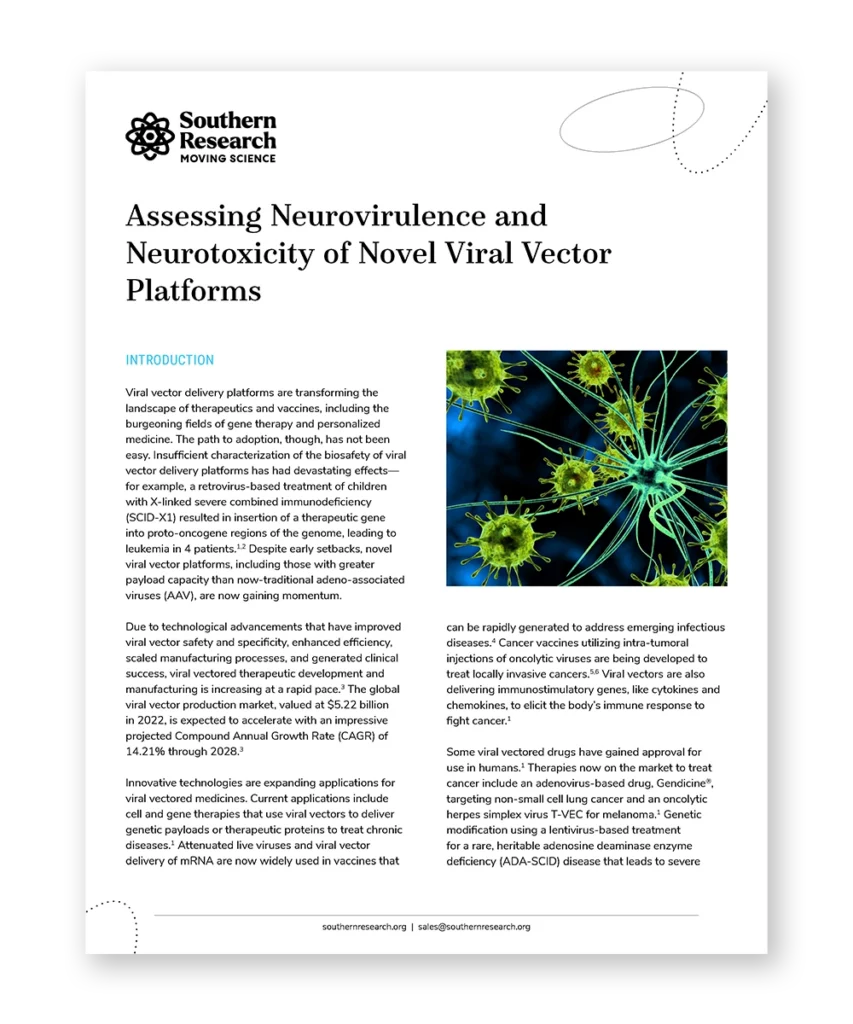
Design choices make a real impact here, as well. Generous white space, clear typographic hierarchy, and data visualizations that communicate a specific insight quickly all contribute to a document that feels rigorous and readable at the same time.3 In a scientific context, professional design signals that the underlying content deserves to be taken seriously.
Back Every Claim with Data
For a scientific audience, this one carries particular weight. Unsubstantiated claims erode credibility, so if you assert that your approach reduces processing time or improves reproducibility, show the data and cite the study.
A 2019 national survey found that 68% of respondents said it matters whether scientists make their data and methods fully transparent, and 55% indicated that peer-reviewed publication matters when evaluating a finding.4 Your readers bring that same lens to the content that they consume at work, which means that citing published literature alongside internal data — application notes, validation studies, customer outcomes — is one of the most direct routes to credibility. Think of it the same way you’d approach a methods and results section: show your work and let the data carry the argument.
Get It in Front of the Right Eyes
Even a well-crafted life science white paper won’t gain much traction if it doesn’t reach the right reader, which means distribution deserves the same strategic attention as the content itself. The most effective channels for life science audiences include:
- LinkedIn: Organic posts combined with paid targeted ads let you reach specific job titles, industries, and company sizes, putting your white paper directly in front of the lab directors and clinical research leaders most likely to find it relevant.
- Gated landing pages: A focused landing page with a compelling description can turn curious visitors into qualified leads, especially when the form is kept short enough to reduce friction.
- Email nurture sequences: A well-designed nurture sequence extends the life of your white paper by following up with related content, data highlights, and application examples that keep the reader moving through the funnel over time.
- Conference handouts and sales enablement: A professionally designed white paper gives your sales team a credible leave-behind that reinforces the conversation long after the conference.
Digital white papers can also track reader engagement — helping you understand what content resonates and where interest drops off — which is just as useful for shaping future assets as knowing who downloaded in the first place.5

Samba Scientific: Where the Science Meets the Strategy
Writing a white paper that scientists actually read requires scientific fluency, marketing expertise, and design skill working in concert — and that’s where Samba Scientific can help.
Our team of PhD-level scientists, technical writers, and strategic marketers understands the life science audience because we are that audience. We know the difference between content that resonates with a lab director versus a biotech CEO, and we know how to frame your technology’s value in the evidence-first language that builds genuine trust with scientific decision-makers. From content strategy and writing through professional design and targeted distribution, Samba delivers life science white papers that don’t just get downloaded, but get read, shared, and acted on.
If your white paper isn’t moving prospects through the funnel, the issue is often less about reach and more about how the content is written, structured, and positioned — and that’s exactly the kind of challenge we enjoy working through.
Ready to create a white paper that works as hard as your science? Let’s talk.
References
- Equinet Media. The Staying Power of White Papers in B2B Content Marketing.
https://www.equinetmedia.com/blog/the-staying-power-of-white-papers-in-b2b-content-marketing - Trade Press Services. Yes, White Papers Are Still Essential for B2B Marketers.
https://www.tradepressservices.com/yes-white-papers-are-still-essential/ - AdSpyder. Advertising White Papers and E-books for Effective B2B Marketing.
https://adspyder.io/blog/advertising-white-papers-in-content-marketing/ - Scheufele & Krause. Signaling the Trustworthiness of Science. PNAS, 2019.
https://www.pnas.org/doi/10.1073/pnas.1913039116 - Turtl. What Makes a Great White Paper & Its Role in Marketing.
https://turtl.co/blog/the-great-white-paper-and-the-role-it-plays-in-marketing/