Biotech lead generation is most effective when it combines strong brand positioning, authoritative content marketing, intelligent marketing automation, and a profound understanding of how scientific buyers make purchasing decisions. Unlike most industries, biotech buyers are highly educated, risk-averse, and require multiple touchpoints before engaging. The seven strategies outlined below are based on these realities.
Let’s keep it real: marketing a groundbreaking cell therapy platform or a revolutionary diagnostic tool isn’t quite the same thing as selling sneakers. Your target audience isn’t scrolling through their Instagram feed looking for the next hot PCR machine. They’re buried in research papers, grant applications, and back-to-back meetings about regulatory compliance.
So how do you generate quality leads in the biotech and life sciences space when your buyers are some of the most discerning, scientifically rigorous professionals on the planet? The answer lies in strategies that respect their intelligence, meet them where they are, and leverage the methods that actually work in 2026. Continue reading to explore seven key ideas to integrate into your biotech lead generation strategy.
Key Takeaways:
- Having strong positioning that sets your brand apart is essential for attracting quality leads in a crowded biotech market
- Leveraging thoughtful and compelling content helps to move leads through your marketing funnel
- Setting up automated workflows in your CRM can streamline biotech lead nurturing
- Structuring your content to align with AI search best practices helps to ensure visibility
- Combining thought leadership and social proof creates a strong backbone for credibility
- Continuously monitoring your marketing data provides insights on how to optimize for a more impactful reach
- Partnering with a life science marketing agency can allow you to divide and conquer
1. Precision Positioning: Because "We Do Biotech" Isn't Enough
First thing’s first: Positioning is the foundation for biotech lead generation. It’s more than just words, and it’s more than a clever tagline or a bold statement that’s just fluff. You also need to avoid the temptation to go broad with your positioning. If your positioning could apply to just about any biotech company on the market, it’s meaningless. You want your positioning to resonate with your target audience and show them that you understand their unique needs.
Are you the go-to for rare disease diagnostics? The only platform that integrates multi-omics data for oncology research? The automation solution specifically designed for CRISPR workflows? Get specific with your positioning. Your ideal customers aren’t looking for a generalist; they’re looking for the expert to help them overcome their specific challenge.
Your positioning will make some people say, “that’s not for me,” and that’s okay. You want your messaging to strike a chord in your target audience and encourage them to want to learn more. Plus, by leveraging your positioning to filter out the wrong leads from the start, your sales team can focus on connecting with the individuals who are truly interested in—and will benefit from—your product.
2. Content in the Sales Funnel: The Long Game That Pays Off
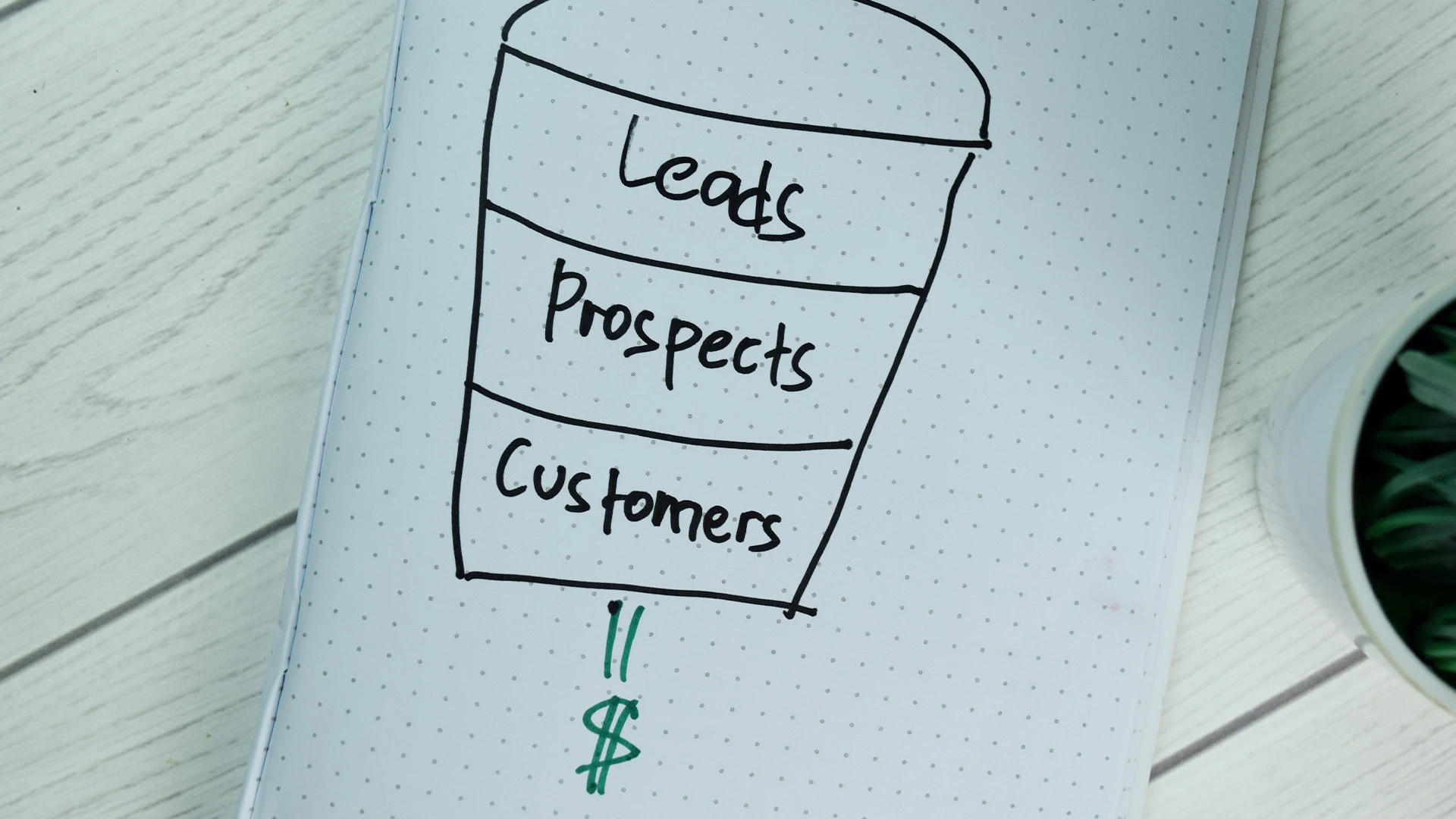
We won’t pretend that biotech lead generation is a fast and painless process that rockets off as soon as you nail down your positioning. Biotech sales cycles are notoriously long. A laboratory director isn’t going to see one blog post and immediately request a demo of your $500K instrument. The journey down the sales funnel can take months if not years. This careful journey might look like:
- Reading your white paper on improving assay reproducibility (Awareness)
- Downloading your comparison guide on different sequencing technologies (Consideration)
- Attending your webinar on ROI calculations for automation (Decision)
- Finally, requesting the demo after seeing your customer case study (Purchase)
The magic happens when you map content to each stage of the buyer’s journey, making sure that nobody is left behind. Top-of-funnel content educates and builds awareness. Middle-funnel content addresses specific pain points and comparisons. Bottom-funnel content provides proof and removes final objections. Each piece of the strategic inbound marketing funnel moves prospects closer to a decision while positioning you as the obvious choice.
3. Smart Workflows & Automation: Nurture Without the Burnout
Next, let’s talk about what happens after someone downloads that white paper at 2:00am (because scientists keep weird hours, after all). Do they disappear into the abyss of your CRM, out of sight and out of mind? Or do they receive a thoughtfully sequenced series of relevant touchpoints?
Marketing automation in 2026 isn’t about bombarding prospects with daily emails. It’s about intelligent lead nurturing sequences that:
- Segment by role, research focus, and engagement level
- Deliver content based on previous interactions
- Score leads based on meaningful behaviors (not just email opens)
- Alert your sales team when a prospect shows genuine buying signals
The goal is to keep your company top-of-mind during their lengthy evaluation periods without requiring your team to manually track every interaction. As prospects are nurtured and interact with your content, they can gain points within your CRM, which helps to automatically notify your sales team when it’s time to get a call on the calendar.
4. AI Search: Adjusting for the Modern Way to Seek Answers
The advice to “just Google it” has widely been replaced with suggestions like, “Have you tried asking ChatGPT?” In addition to AI transforming biotech workflows in the lab, AI search engines are changing how your prospects discover solutions, which means that you need to adjust your strategies to remain visible and be cited.
As the search landscape evolves, there is a growing need to structure content with AI discoverability in mind. This includes clear, authoritative answers to the specific questions that your audience is asking, comprehensive technical documentation, and content that establishes your company as a trusted source. AI models have been trained to prioritize accuracy and depth (which, conveniently, is exactly what biotech buyers demand), so avoid keyword stuffing and focus on showing genuine expertise that provides value in an easily digestible way: bulleted lists, FAQs, definitions, and a clear flow can help your content stand out to AI while also being reader friendly.

5. Thought Leadership & Social Proof: Credibility Is Currency
As you know, in biotech, trust is everything. Before a research director stakes their reputation on your solution, they need to know that you’re legitimate and worth the investment—both with respect to their money and their precious samples. This is where thought leadership and social proof become your best friends.
Thought leadership demonstrates your expertise through original insights, industry commentary, and forward-thinking perspectives. Publishing on LinkedIn, speaking at industry conferences, and contributing to peer discussions positions your company (and key team members) as authorities. Authenticity is a huge differentiator, so consider having your founder or your principal scientists participate in podcasts or sit down with journalists to share their excitement for your science and grow buzz around your breakthroughs.
Case studies and testimonials provide the social proof of your impact and credibility. Nothing beats a detailed case study showing how you helped a similar organization achieve measurable results. Include the metrics, the challenges, the solution, and the outcome to tell a compelling story and resonate with data-seeking minds. Testimonials offer a more qualitative description of working with you. Your partners or customers can share how your company helped to resolve their pain points and accelerated their research, inspiring others to want the same positive outcomes.
Webinars and virtual events combine both thought leadership and social proof: they showcase expertise while building community and generating high-quality leads. Nowadays, interactive formats (like live Q&A, panel discussions, or workshops) outperform lecture-style presentations, so include time for discussion in your events, and make sure that your messaging remains educational rather than salesy or self-promotional. And, if you’re able to co-host a webinar with an industry partner, you’ll be able to dip into their audience and generate quality leads who may already be further down the sales funnel, which is a sweet bonus.
6. Data-Driven Optimization: Test, Measure, Iterate (The Scientific Method, Applied)
While implementing these tips, don’t forget to track the outcomes of your efforts! You wouldn’t publish research without data, so why would you run marketing campaigns without rigorous analysis? The most successful biotech marketers are the ones who mindfully track metrics and optimize their strategy based on what they learn.
Vanity metrics (page views, email open rates) are nice. Revenue metrics (pipeline generated, customer acquisition cost, conversion rates by channel) are even better. Track what your campaigns actually contribute to revenue, not just awareness. Indulge your scientist brain and A/B test your messaging, landing pages, and CTAs. Use attribution modeling to understand which touchpoints truly influence decisions, then transform your insights into meaningful strategy for the next iteration.
Think of it as applying the scientific method to your marketing: hypothesize, test, analyze, refine, repeat. Your marketing strategy is a living, breathing entity, so don’t just set it and forget it. Tend to your marketing strategy like you do your delicate samples and continuously learn about what’s resonating and what’s falling flat to power your next successful campaign.
7. Agency Partnership: The Divide-and-Conquer Advantage
Your internal team is brilliant at understanding the science, the technology, and your customers’ needs, but they might not have expertise in SEO, marketing automation platforms, content strategy, paid media optimization, or the latest AI search algorithms. They likely also don’t have the time to dig into your Google Analytics metrics when they’re focused on reviewing clinical trial data.
Working with a specialized biotech marketing agency isn’t about outsourcing everything, it’s about strategic division of labor. Your team brings the scientific expertise and industry knowledge. The agency brings marketing execution, proven strategies, and fresh perspectives.
The best partnerships happen when agencies become an extension of your team, not just a vendor. Look for partners who understand your specific sector, speak your language (and know how to select the right stock imagery when needed), and have a track record in B2B life sciences marketing. True symbiotic company and agency partnerships are fruitful and a great long-term investment in a competitive and dynamic industry.
The Bottom Line
Biotech lead generation in 2026 requires a sophisticated, multi-channel approach that respects the intelligence of your audience while leveraging modern marketing tools. It’s about precisely positioning your unique value, nurturing leads through education-rich content, automating intelligently, showing up wherever your audience is searching, building credibility through thought leadership, optimizing relentlessly, and knowing when to bring in specialized expertise.
The companies that master these strategies won’t just generate more leads—they’ll generate better leads, shorten their sales cycles, and build lasting relationships with the scientists, researchers, and executives who drive innovation forward.
Science waits for no one. Let’s connect and discuss how our team of scientists-turned-marketers is ready to help boost your biotech lead generation efforts today.